Data Storage

Verizon, Comcast Say They Are P2P Friendly 158

An anonymous reader writes "Verizon and Comcast announced they will not 'block or throttle Internet traffic delivered via peer-to-peer networks' — essentially proclaiming that they are now P2P friendly. The decision came as a result of a test conducted with Verizon and Pando Networks, testing the benefits of a P2P/ISP partnership. During the test, the amount of P2P content delivered to Verizon subscribers from inside its network grew from 2 percent to 50 percent. This shows ISPs need to work with P2P companies to improve content delivery and manage traffic. Verizon also announced it will be looking at ways to use P2P technology to deploy new features on FiOS TV." Just the same, read on for one approach to mitigating likely tightening restrictions on P2P network use.
Hardware Hacking

Pushing a CPU to Heat Death, Intentionally 291

sdougal writes "This site is showing a Pico-ITX board running Ubuntu with no cooling whatsoever. They even let the public guess how long it would last: 'Last week thousands of you placed bets on how long the new Pico-ITX board from VIA, the VIA EPIA PX5000EG, can last without any cooling whatsoever. An ARTiGO Builder Kit was offered as the grand prize. Yesterday afternoon the voting stopped and the Naked Pico Challenge started in earnest. We simply loaded up Ubuntu 8.04, set it to work playing an mpeg-4 video and then removed the heatsink, leaving the CPU and VX700 chipset bare to the world. We recorded the event here in this video and set up a live video stream so you punters can keep a watchful eye on the PX5000EG as it works away.'"
Power

US Data Centers Wary of Sharing Energy Data With Feds 101

1sockchuck writes "The EPA has been seeking at least 100 data center operators willing to share data about their energy usage to help the government develop an Energy Star program for data centers. Thus far, only 54 data centers have signed up, which suggests that few data center operators are eager to tell the government exactly how much energy they are using. The EPA issued a report to Congress last year on data center power usage, and is already developing an Energy Star program to rate servers. Can a program designed to rank the energy efficiency of appliances and computer monitors be a useful tool in addressing the enormous energy consumption of data centers?"
Graphics

Open Source Graphics Card Available For Advance Orders 262

mollyhackit writes "The Open Graphics Project, which we've been following since it first started looking for experts four years ago, has just announced that the OGD1 is available for preorder now. The design features 2 DVI, 256MB RAM, PCI-X, and a Xilinx Spartan-3 FPGA along with a nonvolatile FPGA for programming on boot. FPGAs are reprogrammable hardware which means the graphics card can be optimized for specific tasks and execute them faster than a general purpose CPU. The card could be programmed for certain codecs to speed up encoding or decoding. An open hardware design means potential for better driver support. Of course you could always use the FPGA for something else... say crypto cracking."
Television

$100 Roku Netflix Player Targets Apple TV 165

Binge notes CNet coverage of the Netflix Player by Roku, which it calls "bare-bones." Less than 10% of Netfilx's catalog is available for the Instant Viewing option. Three more Netflix players are said to be due for release by the end of the year. The Roku is "...the first product that allows subscribers to have movies and TV shows from the service's Instant Viewing feature (aka 'Watch Now') to be streamed directly to their TV screen... With the release of the Netflix Player, subscribers need only have a wired or wireless broadband connection to access the entire Instant Viewing catalog through their TV."
Portables

2nd Generation "$100 Laptop" Will Be an E-Book Reader 286

waderoush writes "At a conference sponsored by the One Laptop Per Child Foundation this morning, OLPC founder unveiled the design for the foundation's second-generation laptop. It's actually not a laptop at all — it's a dual-screen e-book reader (we've got pictures). Negroponte said the foundation hopes that the cost of the new device, which is scheduled for production by 2010, can be kept to $75, in part by using low-cost displays manufactured for portable DVD players."
Hardware Hacking

Using RFID Tags Around the House? 254

Attacked-by-gremlins writes "I have a larger family and various items in the house (some tools, some pieces of clothing) 'travel' unexpectedly. We joke about gremlins doing that, but it's tiring never to be sure that I'll find an object where I left it two days ago. For the sheer hacking fun of it, I'm thinking of sticking RFID tags on some and trying to triangulate a position with several tranceivers placed in the house. Has anyone have any suggestions for this amateur 'Google Home'? Thanks."
Security

New 'Phlashing' Attack Sabotages Hardware 242

yahoi writes "A new type of denial-of-service attack, called permanent denial-of-service (PDOS), damages a system so badly that it requires replacement or reinstallation of hardware. A researcher has discovered how to abuse firmware update mechanisms with what he calls 'phlashing' — a type of remote PDOS attack."
Hardware Hacking

Atom-Based Mini-ITX Motherboard Available 240

LWATCDR writes "A company out of the UK is selling an Intel Atom-based Mini-ITX motherboard. It has a riser for two PCI cards, two SATA ports, and an IDE ports so it could make a great little NAS, firewall, MAME box, or low-power workstation. To add to the fun it has a real parallel port 'perfect for hardware hacking,' a real RS-232 port 'perfect for data acquisition,' and two USB ports. The price is around $100, give or take, and hopefully it will come down over time. All in all a nice system to run Linux, WindowsXP, BSD, or maybe even OpenSolaris on."
Hardware

RISC Vs. CISC In Mobile Computing 126

eldavojohn writes "For the processor geeks here, Jon Stokes has a thoughtful article up at Ars Technica analyzing RISC vs. CISC in mobile phones (Wikipedia on Reduced Instruction Set Computers and Complex Instruction Set Computers). He wraps it up with two questions: 'How much is the legacy x86 code base really worth for mobile and ultramobile devices? The consensus seems to be "not much," and I vacillate on this question quite a bit. This question merits an entire article of its own, though,' and 'Will Intel retain its process leadership vs. foundries like TSMC, which are rapidly catching up to it in their timetables for process transitions? ARM, MIPS, and other players in the mobile device space that I haven't mentioned, like NVIDIA, AMD/ATI, VIA, and PowerVR, all depend on these foundries to get their chips to market, so being one process node behind hurts them. But if these RISC and mobile graphics products can compete with Intel's offerings on feature size, then that will neutralize Intel's considerable process advantage.'"
Power

Hairy Solar Cells Could Mean Higher Efficiency 203

kitzilla writes "Two research groups working independently have come up with what they say are cheap processes for growing nanowires to be used with solar cells. The 'hairy' cells provide a direct path for electrons collected at the panel face to reach an electrode, something which has the potential to dramatically improve system efficiency."
AMD

AMD Wants to Standardize PC Gaming 277

Vigile writes "Even though PC gaming has a very devout fan-base, it is impossible to not see the many benefits that console gaming offers: faster loads, better compatibility and more games that fully utilize the hardware to name a few. AMD just launched a new initiative called AMD GAME! that attempts to bring some of these benefits to PC games as well. AMD will be certifying hardware for two different levels of PC gaming standards, testing compatibility with a host of current and future PC titles as well as offering up AMD GAME! ready components or pre-built systems from partners."
Portables

What to Seek in an Older Subnotebook? 250

cyclomedia writes "I'm looking to buy a subnotebook. For those who think that this form factor was created by the Asus EEE (as, seemingly, does Wikipedia) it might interest you that the current forerunner in my search is a 190MHz,64MB,640x480 256 colour beastie known as the Psion Netbook, circa 2001-ish. Basically, I have a desktop, a server and an Xbox and so truly only want it for surfing, email and the odd bit of SSHing home on weekends away. The aforementioned Psion is, however, of the StrongArm processor variety, which nudges it down on the desireability meter, but the fact that there exist Wi-Fi cards for its 16-bit PCMCIA slot does score it extra points. So, anyone here got any suggestions of what to look out for on ebay? So long as I can play Doom II on it too, that is." Any other suggestions for wireless capable subnotebooks with better battery life than things like the EEE or HP's 2133 Mininote?
Robotics

Survivor Buddy, a Friendly Robot Rescuer 109

Roland Piquepaille writes "The St. Petersburg Times, Florida, reports that a well-known robot designer, Robin Murphy, a professor of computer science and engineering at the University of South Florida (USF), 'plans to add a heart to robot rescuers.' As says USF, the goal is to develop 'a robot that will be a companion to a person who may be trapped after a car crash or in building ruins following an earthquake, or someone pinned down by sniper fire.' As said Murphy, 'robots can provide not only a sense of being a 'buddy' by playing soothing music or providing other entertainment, the robot also can be the audio and video link between survivor and family.' Murphy will develop this robot with some money coming from Microsoft. But read more for additional references and a picture of Murphy with her robot rescuers."
Input Devices

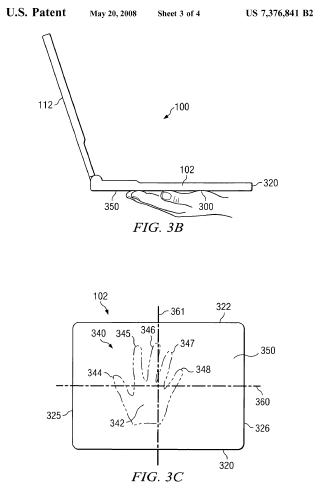
Why Did Touch Take 4 Decades to Catch On? 245

theodp writes "You probably saw media coverage of Bill Gates showing off touch-screen technology to his CEO play group last week. With the introduction of the iPhone and iPod Touch, touch (and multi-touch) technology — which folks like Ray Ozzie enjoyed as undergrads way back in the early '70s — has finally gone mainstream. The only question is: Why did it take four decades for its overnight success? Some suggest the expiration of significant patents filed during '70s and '80s may have had something to do with it — anything else?"
Robotics

Robotic Camera Extension Takes Gigapixel Photos 102

schliz writes "Scientists at Carnegie Mellon University have developed a device that lets a standard digital camera take pictures with a resolution of 1-gigapixel (1,000-megapixels). The Gigapan is a robotic arm that takes multiple pictures of the same scene and blends them into a single image. The resulting picture can be expanded to show incredible detail."
Power

World's Newest, Most Powerful Laser Comes Online 110

deglr6328 writes "The OMEGA EP laser at the University of Rochester's Laboratory for Laser Energetics was dedicated today at the Robert L. Sproull Center for Ultra High Intensity Laser Research. The new laser, which has been in design since ~2002 will, at 1 kilojoule per 1 picosecond pulse, be the highest energy petawatt-scale laser ever created by far. For a fleeting fraction of a second, it will deliver a beam of infrared light at 1054 nm that is more powerful than the total energy consumption of all human activity on the planet, to a tiny spot the size of the head of a pin. Previous petawatt scale lasers such as the one created at Lawrence Livermore labs in the late '90s and (dismantled in 1999) were capable of only several hundred joules per pulse. The new OMEGA EP laser will be able to manifest power densities sufficient to examine Unruh and Hawking radiation-like phenomena in the laboratory and will have the capability to directly produce nuclear reactions through ultra high electric field initiated photodisintegration."
Hardware

A Baseball Hat That Reads Your Mind 63

esocid writes to tell us that researchers from Taiwan have created a new baseball cap complete with embedded bio-signal monitoring system. The purpose was to give a neural interface that could be useful in everyday life. "The cap contains five embedded dry electrodes on the wearer's forehead, and one electrode behind the left ear, that acquire EEG signals. Then, the EEG signals are wirelessly transmitted to a data receiver, where they are processed in real-time by a dual-core processor. The BCI system includes Bluetooth transmission for distances of 10m or less (e.g., for driving applications), as well as RF transmission for distances up to 600m (e.g., for potential sports applications). Next, the processed signals are transmitted back to the cap, where the data can be stored, displayed in real-time on a screen, or be used to trigger an audio warning, if necessary."
Medicine

Amputee Sprinter Wins Olympic Appeal to Compete 366

Dr. Eggman writes "Oscar Pistorius, a 21-year-old South African double-amputee sprinter, has won his appeal filed with the Court of Arbitration for Sport. This overturns a ban imposed by the International Association of Athletics Federations, and allows Mr. Pistorius the chance to compete against other able-bodied athletes for a chance at a place on the South African team for the Beijing Olympics. He currently holds the 400-meter Paralympic world sprinting record, but must improve on his time by 1.01 seconds to meet the Olympic qualification standard. However, even if Pistorius fails to get the qualifying time, South African selectors could add Oscar to the Olympic 1,600-meter relay squad."

Slashdot Top Deals