Medicine

Blue Light Like That From Smartphones Linked To Some Cancers, Study Finds (cnn.com) 140

A new study, published Monday in the journal Environmental Health Perspectives, found that exposure to the kind of blue light emitted by outdoor LEDs, smartphones and tablets may increase your risk of breast or prostate cancer. The study compared previous exposure to artificial lights at night between approximately 2,000 breast or prostate cancer patients and approximately 2,000 controls living in Barcelona and Madrid. Slashdot reader al0ha writes: This study seems to say that exposure to LED light temperatures higher than 3,000 Kelvin suppresses melatonin because it contains increased blue light, and at least one city (Davis, California) has gone to the expense of removing higher temperature LED lights and replacing them with ones that have lower color temperatures. Specifically, the study found that "those exposed to high levels of outdoor blue light at night had around a 1.5-fold higher risk of developing breast cancer and a twofold higher risk of developing prostate cancer, compared with those who were less exposed," reports CNN. "Men exposed to high levels of indoor artificial light also had 2.8-fold higher risk of developing prostate cancer, according to the study."
Medicine

Rick Dickinson, Designer of Sinclair Spectrum Home Computers, Dies (bbc.co.uk) 49

New submitter Badger Nadgers quotes a report from the BBC: Rick Dickinson, the designer of Sinclair computers, has died in the U.S. while receiving treatment for cancer. The British designer, thought to be in his 60s, worked in-house for Sinclair Research and oversaw the creation of its home computers in the 1980s. He was responsible for the boxy look of the ZX80 and ZX81 and the Bauhaus-inspired appearance of the Spectrum. Mr Dickinson also helped to develop the technologies for the UK company's touch-sensitive and rubber keyboards. He was recently linked to a crowd-funded project by Retro Computers to turn the Spectrum into a handheld computer. Some of the early reference designs for the machine were drawn up by him.
Medicine

In First, Doctors Treat Rare Genetic Disorder With an Injection In Utero (arstechnica.com) 52

An anonymous reader quotes a report from Ars Technica: Three babies with a rare genetic disorder have been spared the worst effects of their condition thanks to an experimental injection they received in utero, researchers report this week in The New England Journal of Medicine. The success marks the first time a genetic disorder has been partially reversed by such a treatment prior to birth. The in utero injections treated a rare, recessive genetic condition called X-linked hypohidrotic ectodermal dysplasia (XLHED), which affects the development of skin, hair, nails, and teeth. People with the disorder have sparse body and head hair, dry eyes, mouths, and airways, and few teeth, which are usually pointy. But most dangerously, the condition also disrupts development of sweat glands throughout the body. People with XLHED have fewer sweat glands and/or poorly functioning ones. This leaves individuals vulnerable to high fevers and over-heating (hyperthermia), which can be life-threatening and lead to medical complications.

For the new experimental treatment, the researchers realized that it all came down to timing. Humans develop sweat glands much earlier in their development, generally between the 20th and 30th week of pregnancy. To prevent XLHED from wreaking havoc, the researchers needed to deliver the protein prior to birth. After testing the idea for safety and efficacy in mice and monkeys, doctors in Germany got a compassionate-use approval to try it in a 38-year-old pregnant woman. She had a family history of XLHED, a young son with the condition, and was found to be carrying twin boys with it, too. [...] The researchers will track the babies' development to see if the effects are permanent, but data from animals suggests that they will be.

NASA

NASA To Cancel Lunar Resource Prospector Mission (theverge.com) 95

New submitter XXongo writes: NASA has told the Lunar Resource Prospector Mission team to cease work on developing the mission by the end of May. The proposed mission was in development to send a rover to the lunar pole in 2022, with the objective to drill into ice frozen in permanently shadowed craters. Use of such ice has been proposed as a resource that could be processd into rocket fuel, oxygen, and water for life support systems.

The cancellation apparently is partly due to the mission having been shifted from the Human Exploration directorate of NASA, which is excited by the possibility of lunar resources supporting exploration, to the Science Mission directorate, which does not consider lunar ice a high priority for science. The cancellation of the mission has gotten some controversy from the lunar science community, with the members of the Lunar Exploration Analysis Group (LEAG) writing an open letter to new administrator Bridenstine protesting the cancellation.

ISS

NASA To Pay More For Less Cargo Delivery To the Space Station (arstechnica.com) 172

A new report from NASA's inspector general, Paul Martin, finds that NASA will pay significantly more for commercial cargo delivery to the ISS in the 2020s rather than enjoying cost savings from maturing systems. "NASA will likely pay $400 million more for its second round of delivery contracts from 2020 to 2024 even though the agency will be moving six fewer tons of cargo," reports Ars Technica. "On a cost per kilogram basis, this represents a 14-percent increase." From the report: One of the main reasons for this increase, the report says, is a 50-percent increase in prices from SpaceX, which has thus far flown the bulk of missions for NASA's commercial cargo program with its Dragon spacecraft and Falcon 9 rocket. This is somewhat surprising because, during the first round of supply missions, which began in 2012, SpaceX had substantially lower costs than NASA's other partner, Orbital ATK. SpaceX and Orbital ATK are expected to fly 31 supply missions between 2012 and 2020, the first phase of the supply contract. Of those, the new report states, SpaceX is scheduled to complete 20 flights at an average cost of $152.1 million per mission. Orbital ATK is scheduled to complete 11 missions at an average cost of $262.6 million per mission.

But that cost differential will largely evaporate in the second round of cargo supply contracts. For flights from 2020 to 2024, SpaceX will increase its price while Orbital ATK cuts its own by 15 percent. The new report provides unprecedented public detail about the second phase of commercial resupply contracts, known as CRS-2, which NASA awarded in a competitively bid process in 2016. SpaceX and Orbital ATK again won contracts (for a minimum of six flights), along with a new provider, Sierra Nevada Corp. and its Dream Chaser vehicle. Bids by Boeing and Lockheed Martin were not accepted.

Science

Einstein's 'Spooky Action' Has Been Demonstrated On a Massive Scale For the First Time (sciencealert.com) 278

schwit1 shares a report from ScienceAlert: For the first time, scientists have managed to show quantum entanglement -- which Einstein famously described as "spooky action at a distance" -- happening between macroscopic objects, a major step forward in our understanding of quantum physics. Quantum entanglement links particles in a way that they instantly affect each other, even over vast distances. On the surface, this powerful bond defies classical physics and, generally, our understanding of reality, which is why Einstein found it so spooky. But the phenomenon has since become a cornerstone of modern technology. Still, up until now quantum entanglement has only been demonstrated to work at the smallest of scales, in systems based on light and atoms, for example. Any attempt to increase the sizes has caused problems with stability, with the slightest of environmental disturbances breaking the connection. But new research changes all of this, by demonstrating that this "spooky action" can indeed be a reality between massive objects. We're not talking massive in the black hole sense but in the macroscopic sense -- two 15-micrometer-wide vibrating drum heads. And the next step will be to test whether those vibrations are being teleported between the two objects. The research has been published in the journal Nature.
Space

Jeff Bezos Says He Liquidates a $1 Billion of Amazon Stock Every Year To Pay For His Rocket Company Blue Origin (businessinsider.com) 96

Amazon CEO Jeff Bezos spends a tiny fraction of his net worth to fund Blue Origin, the aerospace company he started in 2000. From a report: For a man worth $127 billion, that tiny fraction amounts to $1 billion a year, which he gets by liquidating Amazon stock, Bezos said at an Axel Springer awards event in Berlin, Germany, hosted by Business Insider's US editor-in-chief, Alyson Shontell. "The only way I can see to deploy this much financial resource is by converting my Amazon winnings into space travel," he said in an interview with Axel Springer CEO Mathias Dopfner. "Blue Origin is expensive enough to be able to use that fortune." Bezos said he planned to continue funding the company through that annual tradition long into the future. Bezos famously has numerous projects. He runs Amazon, owns The Washington Post, and is working on turning a mansion in Washington, DC, into a single-family home, to name a few. None of these, he said, are as relevant or as worthy of his money as Blue Origin, which he called "the most important work I'm doing."
Science

Researchers Are Keeping Pig Brains Alive Outside the Body (technologyreview.com) 150

In a step that could change the definition of death, researchers have restored circulation to the brains of decapitated pigs and kept the reanimated organs alive for as long as 36 hours. From a report: The feat offers scientists a new way to study intact brains in the lab in stunning detail. But it also inaugurates a bizarre new possibility in life extension, should human brains ever be kept on life support outside the body. The work was described on March 28 at a meeting held at the National Institutes of Health to investigate ethical issues arising as US neuroscience centers explore the limits of brain science. During the event, Yale University neuroscientist Nenad Sestan disclosed that a team he leads had experimented on between 100 and 200 pig brains obtained from a slaughterhouse, restoring their circulation using a system of pumps, heaters, and bags of artificial blood warmed to body temperature.
Space

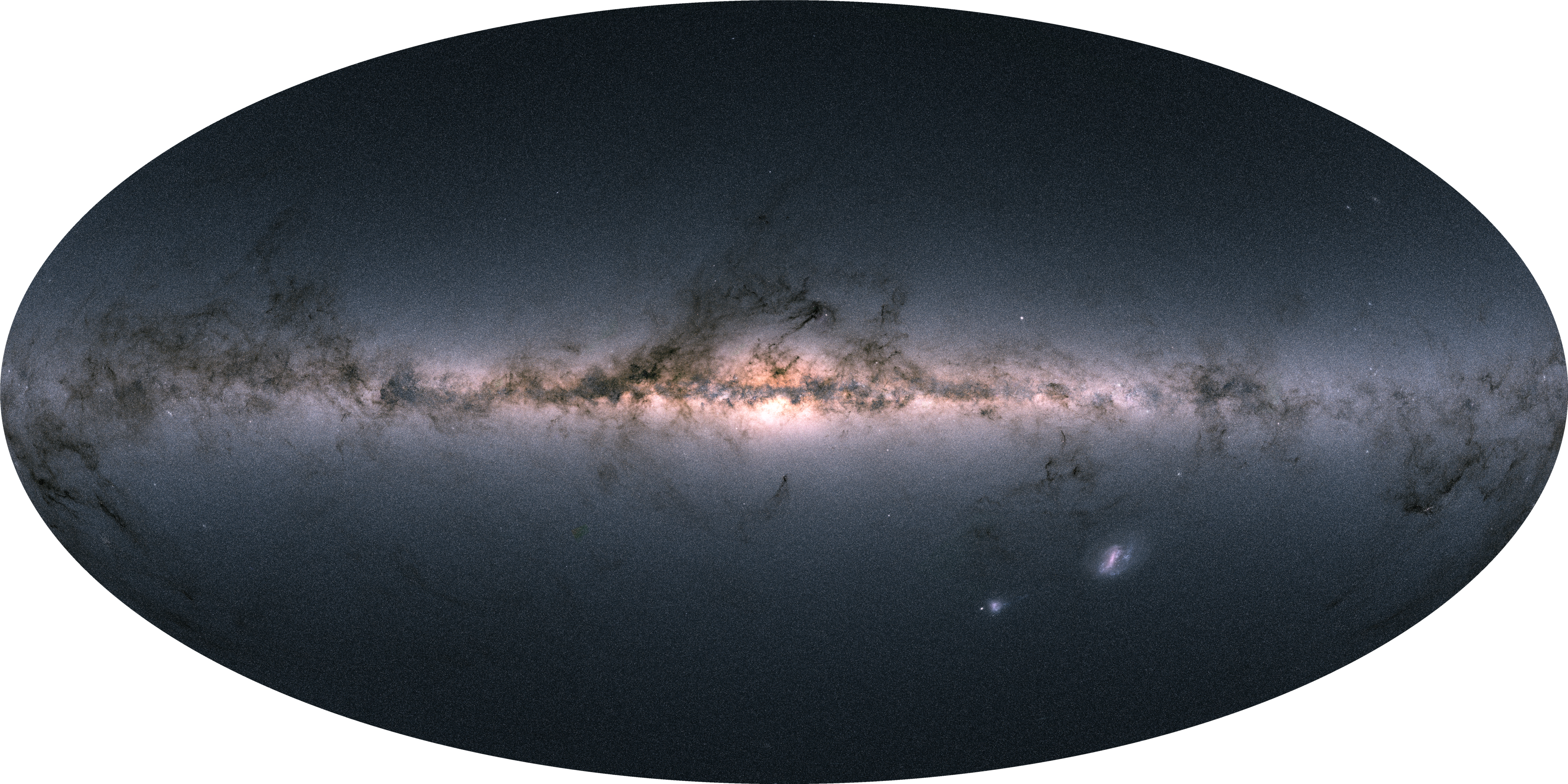
ESA Releases Largest Star Map Ever Online (gizmodo.com) 26

S810 writes: The European Space Agency (ESA) has released a treasure trove of data from its Gaia Spacecraft; totaling around 1.7 billion stars. This star map is the largest of its kind to date. In addition to the star map, the data also contains motion and color data of 1.3 billion stars relative to the Sun. Furthermore, it includes "radial velocities, amount of dust, and surface temperatures of lots of stars, and a catalogue of over 14,000 Solar System objects, including asteroids," reports Gizmodo. You can view the data here, and view a guide for what the data contains and how to use it here.
Medicine

Medicare To Require Hospitals To Post Prices Online (pbs.org) 156

An anonymous reader quotes a report from PBS: Medicare will require hospitals to post their standard prices online and make electronic medical records more readily available to patients, officials said Tuesday. The program is also starting a comprehensive review of how it will pay for costly new forms of immunotherapy to battle cancer. Hospitals are required to disclose prices publicly, but the latest change would put that information online in machine-readable format that can be easily processed by computers. It may still prove to be confusing to consumers, since standard rates are like list prices and don't reflect what insurers and government programs pay.

Likewise, many health care providers already make computerized records available to patients, but starting in 2021 Medicare would base part of a hospital's payments on how good a job they do. Using electronic medical records remains a cumbersome task, and the Trump administration has invited technology companies to design secure apps that would let patients access their records from all their providers instead of having to go to different portals.
Seema Verma, head of the Centers for Medicare and Medicaid Services, also announced Medicare is starting a comprehensive review of how it will pay for a costly new form of immunotherapy called CAR-T. It's an expensive gene therapy that turbocharges a patient's own immune system cells to attack cancer. The cost for such a procedure can exceed $370,000 per patient.
Space

Scientists Discover That Uranus Smells Like Rotten Eggs (space.com) 76

An anonymous reader writes: According to a study published in Nature Astronomy, scientists have determined that the atmosphere of Uranus smells like rotten eggs. The smell of Uranus was determined by the use of an Near-Infrared Integral Field Spectrometer (NIFS), an instrument that allows scientists to determine what an atmosphere is composed of based upon the reflections of sunlight that bounce off of it. Specifically, the clouds in Uranus' upper atmosphere consist of hydrogen sulfide, the molecule that makes rotten eggs so stinky. "If an unfortunate human were ever to descend through Uranus' clouds, they would be met with very unpleasant and odiferous conditions," study lead author Patrick Irwin, of Oxford University in England, said in a statement. But that wayward pioneer would have bigger problems, he added: "Suffocation and exposure in the negative 200 degrees Celsius [minus 328 degrees Fahrenheit] atmosphere, made of mostly hydrogen, helium, and methane, would take its toll long before the smell."
Space

Incredible New Gif Shows Cosmic 'Snow' On the Surface of a Comet (gizmodo.com) 89

Press2ToContinue shares a report from Gizmodo: What you're looking at is the surface of the comet 67p/Churyumov-Gerasimenko, which is orbited by the European Space Agency's Rosetta probe. The photo comes from Rosetta's OSIRIS, or Optical, Spectroscopic, and Infrared Remote Imaging System. The raw data was collected on June 1, 2016, and posted publicly on March 22 of this year. Twitter user landru79 processed the gif from this data release and shared it yesterday. In the foreground is the comet's surface (still several kilometers away from the probe), and three kinds of specks. The stars in the background belong to the constellation Canis Major, according to ESA senior advisor Mark McCaughrean. Some of the foreground stuff could be streaks from high-energy particles striking the cameraâ"it's a charge-coupled device (CCD), so even invisible particles can leave streaks in the results. And some could be dust from the comet itself.
Businesses

EPA Proposes Limits To Science Used In Rulemaking (reuters.com) 314

An anonymous reader quotes a report from Reuters: The U.S. Environmental Protection Agency proposed a rule on Tuesday that would limit the kinds of scientific research it can use in crafting regulations, an apparent concession to big business that has long requested such restrictions. Under the new proposals, the EPA will no longer be able to rely on scientific research that is underpinned by confidential medical and industry data. The measure was billed by EPA Administrator Scott Pruitt as a way to boost transparency for the benefit of the industries his agency regulates. But scientists and former EPA officials worry it will hamstring the agency's ability to protect public health by putting key data off limits.

The EPA has for decades relied on scientific research that is rooted in confidential medical and industry data as a basis for its air, water and chemicals rules. While it publishes enormous amounts of research and data to the public, the confidential material is held back. Business interests have argued the practice is tantamount to writing laws behind closed doors and unfairly prevents them from vetting the research underpinning the EPA's often costly regulatory requirements. They argue that if the data cannot be published, the rules should not be adopted. But ex-EPA officials say the practice is vital.

AI

Scientists Plan Huge European AI Hub To Compete With US (theguardian.com) 69

Leading scientists have drawn up plans for a vast multinational European institute devoted to world-class artificial intelligence (AI) research in a desperate bid to nurture and retain top talent in Europe. From a report: The new institute would be set up for similar reasons as Cern, the particle physics lab near Geneva, which was created after the second world war to rebuild European physics and reverse the brain drain of the brightest and best scientists to the US. Named the European Lab for Learning and Intelligent Systems, or Ellis, the proposed AI institute would have major centres in a handful of countries, the UK included, with each employing hundreds of computer engineers, mathematicians and other scientists with the express aim of keeping Europe at the forefront of AI research. In an open letter that urges governments to act, the scientists describe how Europe has not kept up with the US and China, where the vast majority of leading AI firms and universities are based. The letter adds that while a few "research hotspots" still exist in Europe, "virtually all of the top people in those places are continuously being pursued for recruitment by US companies."
Earth

Cow Could Soon Be Largest Land Mammal Left Due To Human Activity, Says Study (theguardian.com) 245

An anonymous reader quotes a report from The Guardian: The cow could be left as the biggest land mammal on Earth in a few centuries, according to a new study that examines the extinction of large mammals as humans spread around the world. The spread of hominims -- early humans and related species such as Neanderthals -- from Africa thousands of years ago coincided with the extinction of megafauna such as the mammoth, the sabre-toothed tiger and the glyptodon, an armadillo-like creature the size of a car. "There is a very clear pattern of size-biased extinction that follows the migration of hominims out of Africa," the study's lead author, Felisa Smith, of the University of New Mexico, said of the study published in the journal Science on Thursday. Humans apparently targeted big species for meat, while smaller creatures such as rodents escaped, according the report, which examined trends over 125,000 years. In North America, for instance, the mean body mass of land-based mammals has shrunk to 7.6kg (17lb) from 98kg after humans arrived. If the trend continues "the largest mammal on Earth in a few hundred years may well be a domestic cow at about 900kg", the researchers wrote. That would mean the loss of elephants, giraffes and hippos. In March, the world's last male northern white rhino died in Kenya.
AI

AI Trained on Images from Cosmological Simulations Surprisingly Successful at Classifying Real Galaxies in Hubble Images (ucsc.edu) 20

A machine learning method which has been widely used in face recognition and other image- and speech-recognition applications, has shown promise in helping astronomers analyze images of galaxies and understand how they form and evolve. From a report: In a new study, accepted for publication in Astrophysical Journal and available online [PDF], researchers used computer simulations of galaxy formation to train a deep learning algorithm, which then proved surprisingly good at analyzing images of galaxies from the Hubble Space Telescope. The researchers used output from the simulations to generate mock images of simulated galaxies as they would look in observations by the Hubble Space Telescope. The mock images were used to train the deep learning system to recognize three key phases of galaxy evolution previously identified in the simulations. The researchers then gave the system a large set of actual Hubble images to classify.

The results showed a remarkable level of consistency in the neural network's classifications of simulated and real galaxies. "We were not expecting it to be all that successful. I'm amazed at how powerful this is," said coauthor Joel Primack, professor emeritus of physics and a member of the Santa Cruz Institute for Particle Physics (SCIPP) at UC Santa Cruz. "We know the simulations have limitations, so we don't want to make too strong a claim. But we don't think this is just a lucky fluke."

Earth

Was There a Civilization On Earth Before Humans? (theatlantic.com) 457

Adam Frank, writing for The Atlantic: We're used to imagining extinct civilizations in terms of the sunken statues and subterranean ruins. These kinds of artifacts of previous societies are fine if you're only interested in timescales of a few thousands of years. But once you roll the clock back to tens of millions or hundreds of millions of years, things get more complicated.

When it comes to direct evidence of an industrial civilization -- things like cities, factories, and roads -- the geologic record doesn't go back past what's called the Quaternary period 2.6 million years ago. For example, the oldest large-scale stretch of ancient surface lies in the Negev Desert. It's "just" 1.8 million years old -- older surfaces are mostly visible in cross section via something like a cliff face or rock cuts. Go back much farther than the Quaternary and everything has been turned over and crushed to dust.

And, if we're going back this far, we're not talking about human civilizations anymore. Homo sapiens didn't make their appearance on the planet until just 300,000 years or so ago. [...] Given that all direct evidence would be long gone after many millions of years, what kinds of evidence might then still exist? The best way to answer this question is to figure out what evidence we'd leave behind if human civilization collapsed at its current stage of development.
Mr. Frank, along with Gavin Schmidt, Director of the NASA Goddard Institute for Space Studies, have published their research on the subject [PDF].
Science

MIT Researchers Developed a 'System For Dream Control' (vice.com) 54

dmoberhaus writes: Researchers at MIT Media Lab have adapted a centuries' old technique for inducing hypnagogia for the 21st century. Known as Dormio, this system is able to extend and manipulate the period users spend in a transitional state of consciousness between wakefulness and sleep known as hypnagogia. This state is characterized by vivid hallucinations and microdreams, and as the MIT researchers demonstrated, the contents of these microdreams can be manipulated with the system and subsequently result in heightened creativity when the user awakes. Motherboard got the exclusive details on the system.
Google

Google's AR Microscope Quickly Highlights Cancer Cells (uploadvr.com) 42

An anonymous reader quotes a report from UploadVR: Google Research this week revealed an AR microscope (ARM) capable of detecting cancerous cells in real-time with the help of machine learning. Locating cancer with a standard microscope is a difficult and time-consuming process, with a raft of information for doctors to study and investigate. With this new solution, though, the microscope is able to quickly locate cancerous cells and then highlight them as a doctor peers inside. The platform uses a modified light microscope integrated with image analysis and machine learning algorithms into its field of view. An AR display sits above a camera that communicates with the algorithm to display data as soon as it locates an issue. In order words, the microscope immediately begins looking for cancerous cells as soon as you place a sample beneath it. It's effectively doing the same job as a doctor just, according to Google, a lot faster. Google posted a video about the AR microscope on YouTube.
Medicine

Doctors Tried To Lower $148K Cancer Drug Cost; Makers Tripled Its Price (arstechnica.com) 384

Slashdot reader Applehu Akbar writes: Imbruvica, a compound that treats white blood cell cancers, has until now been a bargain at $148,000 per year. Until now, doctors have been able to optimize dosage for each patient by prescribing up to four small-dose pills of it per day.

But after results from a recent small pilot trial indicated that smaller doses would for most patients work as well as the large ones, its manufacturer, Janssen and Pharmacyclics, has decided on the basis of the doctors' interest in smaller dosages to reprice all sizes of the drug to the price of the largest size. This has the effect of tripling the price for patients, and doctors have now put off any plans for further testing of lower dosages.

The researchers are retaliating by urging clinical investigators to test whether the expensive pill could be safely given every other day -- and by calling on America's public health regulators to investigate the drug's pricing.

Slashdot Top Deals